CFMoto Side-by-Sides: UForce and ZForce Lineup Explained
CFMoto is the brand that keeps showing up in your Facebook Marketplace feed at half the price of a Polaris Ranger, and the question you keep asking yourself is whether that discount means you are buying a machine or buying a headache. The short answer: CFMoto is a real manufacturer with a real US dealer network, and their UTVs are not the junk you might picture from a no-name import. But they are not a Polaris either, and the gaps matter when you are three miles from a fence post you need to set before dark.
This page walks through the two CFMoto side-by-side lines: UForce for utility work and ZForce for trail riding. You will get the specs that matter for your use case, an honest read on parts and dealer coverage, and a straight comparison against the used name-brand machine you are also considering.
At a glance
CFMoto Side-by-Side Basics
CFMoto is headquartered in Hangzhou, China, and has been building motorcycles, ATVs and UTVs since the late 1980s. Their US arm, CFMoto Motorsports, handles distribution, warranty claims and dealer support from a facility in the United States. They are not a white-label rebrand of some other factory; they design and build their own engines, frames and CVT systems (the belt-and-pulley transmission that most UTVs use instead of gears).
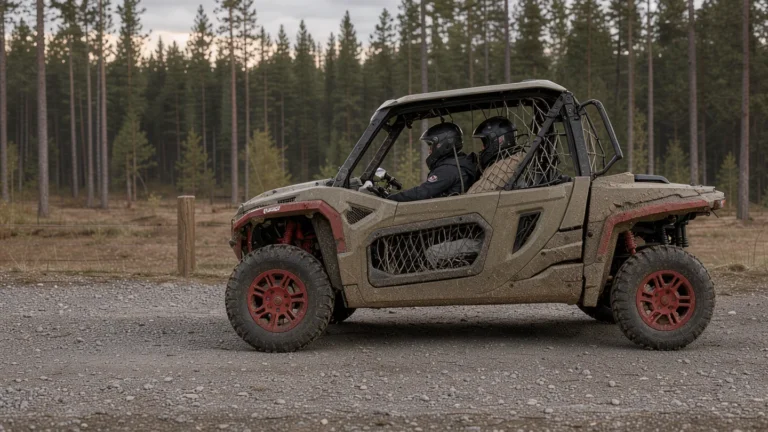
The UTV lineup splits into two families. UForce is the utility line: bigger cargo beds, higher towing ratings, lower gearing for hauling, and a suspension tuned for loaded weight rather than whoops and ruts. ZForce is the trail and sport line: shorter wheelbase, more ground clearance, a stiffer suspension, and a power delivery that feels more eager on a single-track trail.
Engines across both lines run from roughly 500cc to 1000cc, with most current models sitting in the 800 to 1000cc range. Warranty is two years on most models, which matches what Polaris and Can-Am offer on their base trims. The dealer network exists in all 50 states but is thin in some rural areas. Before you buy, call the nearest CFMoto dealer and ask how many UTVs they have sold in the last year and whether they stock CVT belts, rollers and brake pads on the shelf. If the answer is "we order parts from the factory," you are looking at a six-week wait when something breaks mid-hunt.
The UForce Line: Built for Work
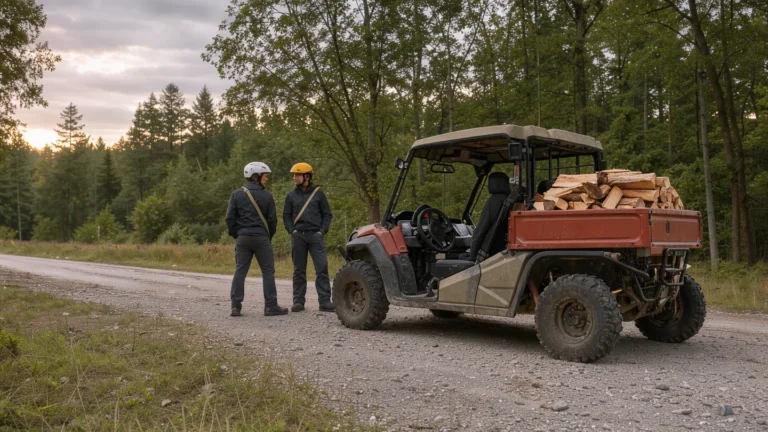
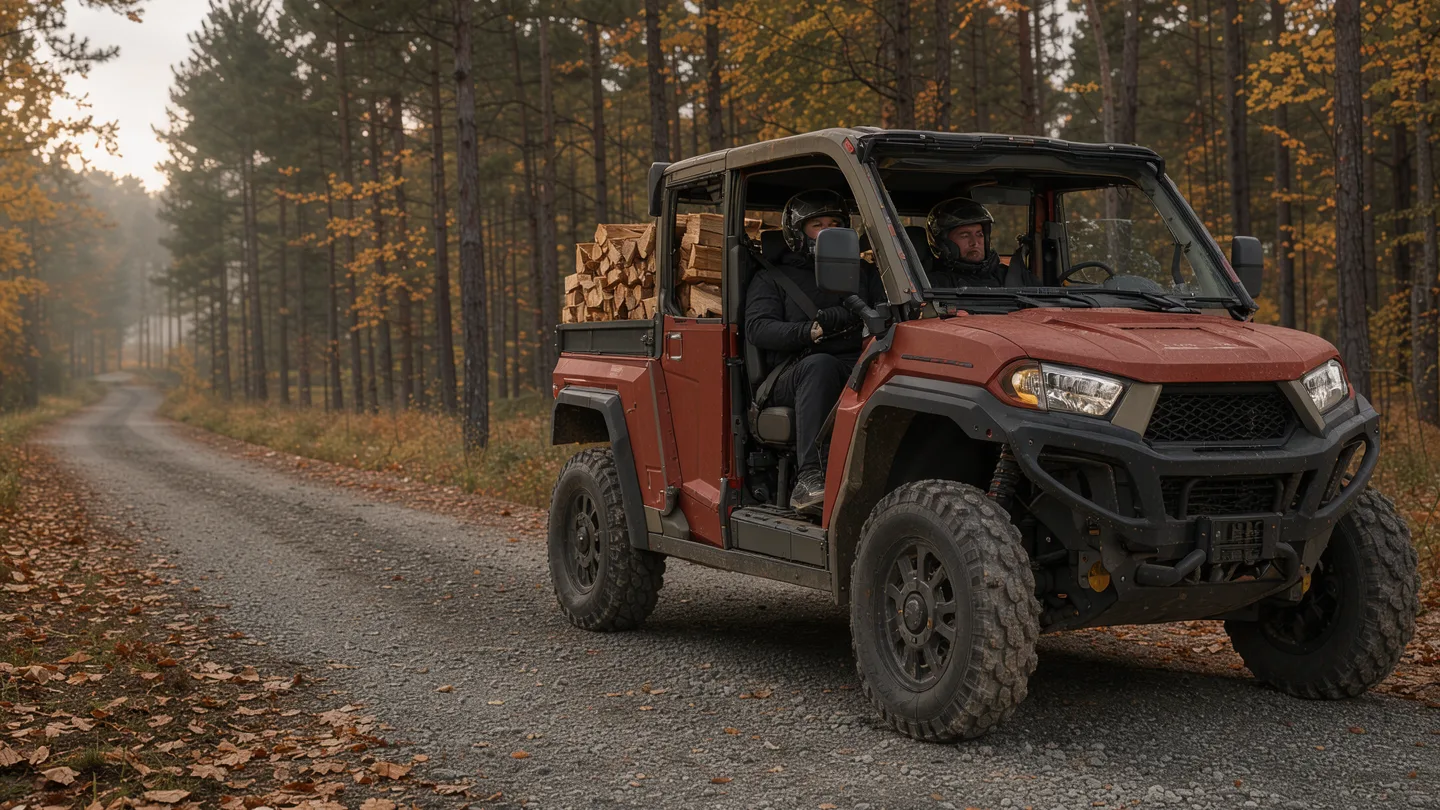
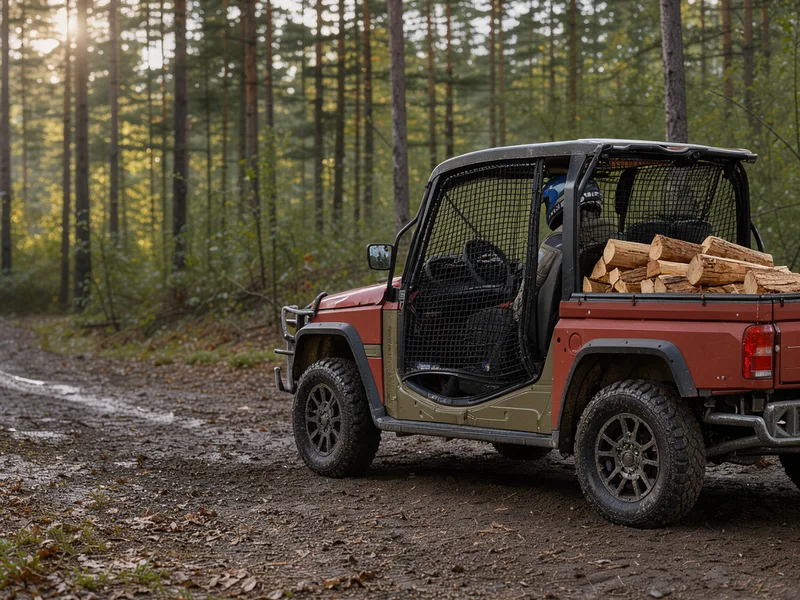
UForce models are the ones you want if you are hauling feed, dragging a fence-post auger, or running a deer out of the timber. The cargo bed is the point. UForce beds are longer and deeper than ZForce beds, and the towing ratings are higher because the final drive is geared lower. You trade top speed for pulling power, which is exactly what you need when the bed is loaded with 800 pounds of hay bales and the trail is a mud wallow.
Current UForce models include the 500, 600, 800, 1000 and 1000 XL. The 1000 is the workhorse: a 963cc twin-cylinder engine, a bed rated around 1,000 pounds, and a towing capacity in the 1,500 to 1,800 pound range depending on configuration. The XL adds a longer bed and a higher payload rating. The 500 and 600 are lighter, cheaper and easier to park in a barn, but they will feel underpowered the first time you load them up on a hill.
The 1000 EPS adds electric power steering, which matters if you are running loaded through tight turns between trees. The base 1000 has manual steering that gets heavy when the bed is full and the ground is soft.
The ZForce Line: Built for Trails
ZForce models are shorter, lighter and more nimble than UForce. If your main use is riding single-track with the family on weekends, or running a hunting trail where you need to duck under low branches and squeeze between pines, the ZForce handles better than the UForce because the wheelbase is shorter and the suspension has more travel.
Current ZForce models include the 500, 800, 950 and 1000. The 950 and 1000 share a 963cc twin-cylinder engine similar to the UForce 1000, but the ZForce is geared taller for speed and the suspension is set up for rougher terrain at higher pace. The 500 and 800 are single-cylinder machines that are lighter and cheaper but will feel gutless on a long uphill with a passenger.
ZForce cargo beds are smaller than UForce beds. You can still haul a deer out, but you are working tighter clearances and the bed is not rated as high. If you need to tow a small trailer, check the specific model's rating before you assume it matches the UForce.
| Feature | UForce (utility) | ZForce (trail) |
|---|---|---|
| Primary use | Hauling, farm work, hunting retrieval | Trail riding, family recreation, light hunting |
| Engine range | 500cc to 1000cc | 500cc to 1000cc |
| Cargo bed | Larger, higher payload rating | Smaller, lower payload rating |
| Towing capacity | Higher (geared lower) | Lower (geared taller) |
| Suspension | Softer, tuned for loaded weight | Stiffer, more travel for rough terrain |
| Wheelbase | Longer, more stable when loaded | Shorter, more nimble on tight trails |
| Ground clearance | Moderate | Higher |
| Top speed | Lower (gearing trade-off) | Higher |
| Price range (approx.) | $7,000 to $15,000 | $7,000 to $16,000 |
| Best for | 5 to 100 acres, feed, fence posts, firewood | Weekend trails, youth riders, light utility |
Which CFMoto fits your situation?
UForce 1000 or 1000 XL
If you are moving feed, dragging a post-hole digger, or running a trailer between pastures, the UForce 1000 is the model to look at. The 963cc twin has enough low-end torque to pull a loaded bed up a hill without lugging the CVT belt. The XL adds bed length if you are hauling longer materials like fence rails or firewood.
UForce 800 or 1000, or ZForce 800
For hunting, the UForce 800 or 1000 gives you the bed space to quarter a deer and the towing rating to pull a small cart. If your stand is on tight single-track where a wide machine will not fit, the ZForce 800 is narrower and more nimble, but you will be working harder to load the deer. Check your state's trail width limits before you commit to a 60-inch-wide machine.
ZForce 500 or 800
If the main use is weekend trails with the kids, the ZForce 500 is the entry point. It is light, manageable, and cheap enough that a teenager's first crash does not ruin your month. The 800 adds power for hills and longer rides. Neither is a youth-specific machine, so check your state's age and supervision rules before putting a 12-year-old in the driver's seat.
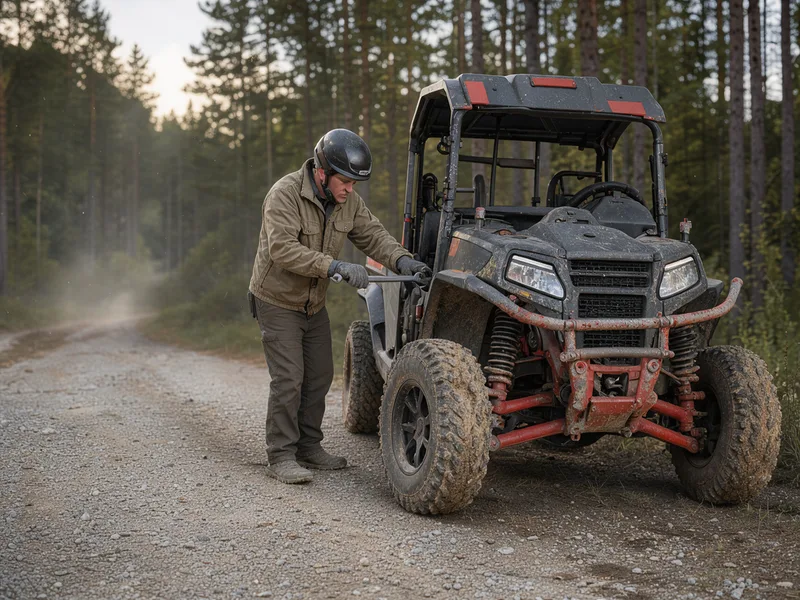
Parts, Dealers and the Three-Year Question
Here is the honest part. CFMoto has a US dealer network, and it is growing. But it is not Polaris. In some rural counties, the nearest CFMoto dealer is 60 to 100 miles away, and they may not stock the specific CVT belt, roller assembly or brake caliper your model needs. When a part is not on the shelf, it ships from the factory or a central warehouse, and that can mean two to six weeks depending on the part and the time of year.
Before you buy, do three things. First, find your nearest CFMoto dealer and drive there. Ask them how many CFMoto UTVs they have sold in the past year. A dealer that has sold two units is not going to stock parts for you. Second, ask what they keep on the shelf: CVT belts, rollers, brake pads, oil filters, and spark plugs. If they order everything, you are one broken belt away from a month without a machine. Third, check the CFMoto owner forums and Facebook groups for your specific model. Search for "CFMoto [model] parts wait" and read what people actually experienced.
The three-year question is real. CFMoto has been in the US market long enough that early machines are now out of warranty, and parts are still available. That is a better track record than some no-name imports that vanished after two seasons. But it is not the same as walking into a Polaris dealer and walking out with a new belt the same afternoon.
How CFMoto Compares to a Used Name-Brand Machine
This is the question most readers are actually asking: should I buy a new CFMoto for $10,000 or a used Polaris Ranger or Can-Am for $10,000? There is no single answer, but here is how to think about it.
A used Polaris Ranger with 3,000 to 5,000 miles on it will have a dealer network within driving distance in almost any rural county. Parts are on the shelf. The resale market is deep, so you can sell it in a weekend if you need to. The downside: you are buying someone else's maintenance history, and a used machine with a worn CVT or a cracked frame is a money pit.
A new CFMoto gives you a warranty, a known history, and a lower purchase price for the same engine size. The downside: thinner dealer coverage, longer parts waits, and a resale market that is not as liquid. If you are handy with a wrench and can order parts online, the CFMoto is a reasonable buy. If you need a machine that will be fixed by Tuesday no matter what, the used name-brand machine is the safer money.
Common questions about CFMoto side-by-sides
Is CFMoto a Chinese brand?
Yes. CFMoto is headquartered in Hangzhou, China, and manufactures its own engines, frames and transmissions there. They are not a rebranded product from another factory. They have a US subsidiary that handles distribution, warranty and dealer support.
How long is the CFMoto UTV warranty?
Most CFMoto UTVs carry a two-year limited warranty, which matches the base warranty on Polaris and Can-Am utility models. Check the specific model's warranty terms at the dealer before you sign, because some configurations or accessories may be excluded.
Are CFMoto parts easy to get?
It depends on where you live and which part you need. Common consumables like oil filters, spark plugs and brake pads are usually available through dealers or online retailers within a few days. CVT belts, rollers and model-specific body panels can take two to six weeks if the dealer does not stock them. Always check parts availability before you buy.
Can I drive a CFMoto UTV on public roads?
CFMoto UTVs are built as off-road vehicles. Whether you can make one street-legal depends on your state's laws, which vary widely. Some states allow UTVs on certain roads with specific equipment (mirrors, turn signals, a windshield, a license plate). Check your state's DMV or DNR rules before you assume you can drive to town.
Is a CFMoto better than a used Polaris?
Neither is universally better. A used Polaris gives you dealer access and a deep parts network. A new CFMoto gives you a warranty and a lower price for similar engine size. If you are within driving distance of a CFMoto dealer that stocks parts, the CFMoto is a solid value. If you are in a remote area with no CFMoto dealer nearby, the used Polaris is the safer buy.
Do CFMoto UTVs hold their value?
CFMoto resale values are lower than Polaris or Can-Am. You will lose more percentage-wise in the first two years. That is the trade-off for the lower purchase price. If you plan to keep the machine five or more years, the resale gap matters less.