Budget UTV Buyer’s Guide: Cheap Side-by-Sides Worth the Money
You want a side-by-side that hauls feed, reaches a deer stand, or gets you to town without a $15,000 sticker. That is fair. The big names charge a lot for a badge, and a lot of what you pay for is dealer support you may never use if you live 40 miles from the nearest shop.
This guide walks through the budget brands that actually sell in the US, what they cost, who builds them, and where the parts come from. It also tells you straight when a used Polaris or Can-Am is the better deal, because sometimes it is.
What you need to know before you buy
- Budget side-by-sides run from about $4,000 to $15,000 new, depending on engine size and features.
- Most budget brands are built in China. The difference between them is dealer support, parts availability, and how long the company has been around.
- CFMoto has the most established US dealer network among budget brands. Coleman and Tracker are sold through Walmart with limited service support.
- A used name-brand machine from 3 to 5 years ago often costs the same as a new budget UTV and has better parts availability and resale value.
- Before you buy any used UTV, check the VIN, the title status, and whether the CVT belt has been replaced.
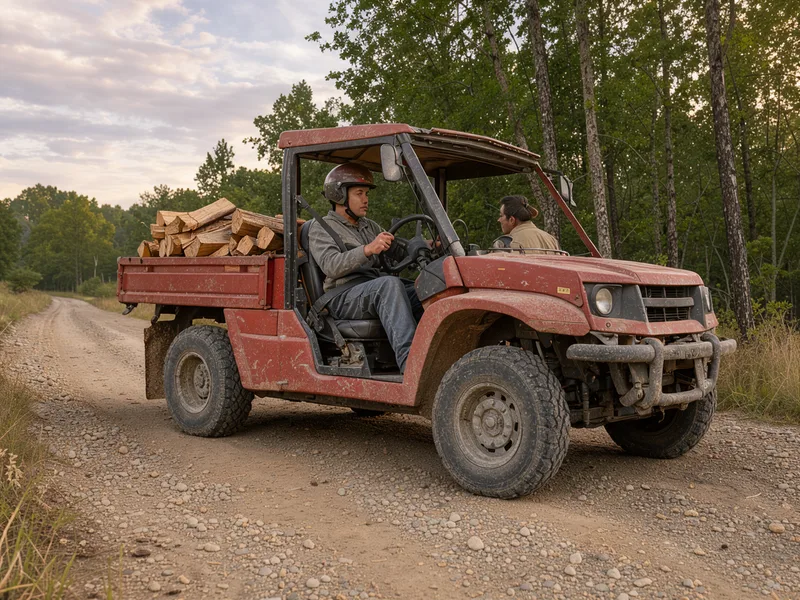
What "cheap side by side" actually means in dollar terms
The budget UTV market splits into three rough bands. At the bottom, you have machines like Coleman and Tracker that sell through big-box stores for roughly $4,000 to $7,000. These are basic: small engines, simple suspension, no frills. They work for light chores and short trails, but they are not built for heavy hauling or rough terrain.
The middle band runs from about $6,000 to $12,000. This is where Massimo, Hisun, Kandi, Intimidator and Odes sit. You get bigger engines, better suspension, and sometimes a dump bed or a winch. The quality varies a lot between brands and even between model years, so you need to look at the specific machine, not just the brand name.
The top of the budget range is roughly $10,000 to $15,000. CFMoto and American Landmaster land here. These machines are closer to what a Polaris or Can-Am offers in terms of build quality and features, but they still cost less. CFMoto in particular has invested in a US dealer network, which matters when you need a part next week instead of next month.
Prices shift with model year, engine size, and whether you are buying from a dealer or a warehouse store. Always check the current sticker at the point of sale.
Brand breakdown
Who builds these machines and what that means for you
Almost every budget UTV sold in the US is manufactured in China. That is not a knock on the engineering. Chinese factories build machines for brands all over the world, including some you would not expect. What matters is who stands behind the machine when something breaks.
Massimo is a US company that sources from Chinese factories and sells through independent dealers. They have been around long enough to have a parts catalog, but dealer coverage is thin in many states. If your nearest Massimo dealer is three hours away, plan on ordering parts online and doing your own wrenching.
Hisun is also Chinese-built with a US distribution arm. They have been expanding their dealer network and offer a few years of warranty coverage on most models. Parts availability has improved over the last several years but is still not as fast as a major brand.
CFMoto is the most established of the budget brands in the US. They have a real dealer network, a parts supply chain, and they sponsor racing, which tells you they are in it for the long haul. Their machines are heavier and better finished than most in this price range.
Coleman and Tracker are sold through Walmart. They are the cheapest way to get a side-by-side, but there is no dealer network behind them. If something breaks, you are ordering parts from a website and fixing it yourself. For a machine you plan to use lightly, that can be fine. For daily work on a ranch, it is a risk.
Kandi makes both gas and electric models. Their electric UTVs are quiet and simple, which some folks like for campground use or short property runs. Gas models are basic but functional.
Intimidator and Odes are newer entrants with limited dealer coverage. They sell online and through a handful of independent shops. Parts availability is the main concern with these brands.
American Landmaster assembles some models in the US, which gives them a slight edge on parts logistics. Their lineup is smaller than CFMoto's, but they have a loyal following in certain regions.
| Brand | Typical price range | Where built | US dealer network | Parts availability |
|---|---|---|---|---|
| Coleman / Tracker | $4,000 to $7,000 | China | None (Walmart only) | Online only, slow |
| Massimo | $5,000 to $10,000 | China | Thin, independent dealers | Online, 2 to 6 weeks |
| Hisun | $6,000 to $12,000 | China | Growing, regional | Online and some dealers |
| Kandi | $5,000 to $10,000 | China | Limited | Online, variable |
| Intimidator / Odes | $5,000 to $10,000 | China | Very limited | Online, uncertain |
| CFMoto | $10,000 to $15,000 | China | Established, national | Dealers and online, faster |
| American Landmaster | $10,000 to $15,000 | US assembly | Regional | Better than most budget brands |
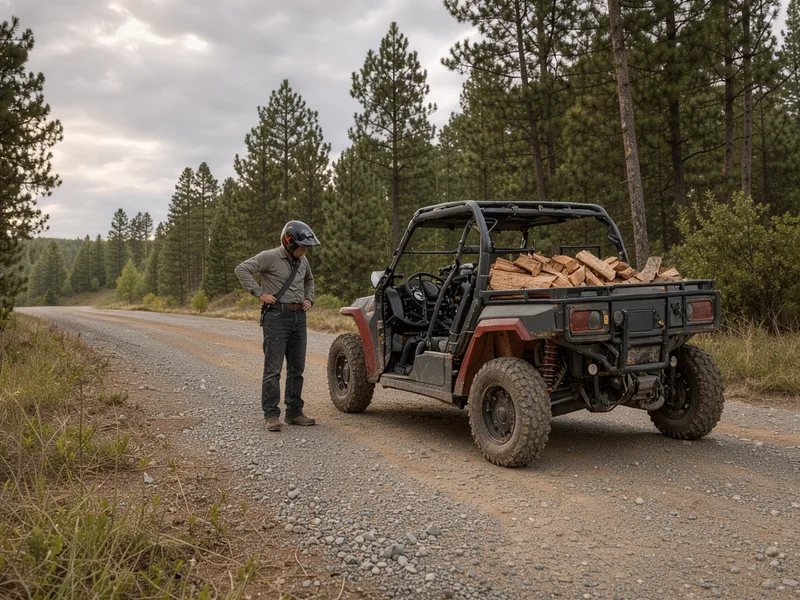
The honest question
When a used name-brand machine is the smarter buy
Here is the thing nobody in the budget UTV space wants to say out loud: a used Polaris Ranger or Can-Am Defender from three to five years ago often costs about the same as a new budget machine, and it is usually the better deal.
Why? Parts. A Polaris or Can-Am has a dealer in almost every county. You can walk in, buy a CVT belt, a brake pad set, or a control arm, and be back on the trail the same afternoon. A budget brand might have that part in a warehouse in California, and you will wait two to six weeks for it to reach your door.
Used name-brand machines also hold their value better. If you buy a new Massimo for $8,000 and want to sell it in two years, you will be lucky to get $4,000. A used Polaris Ranger that cost $8,000 three years ago will still bring $6,000 or more.
The catch is that used machines come with their own risks. You need to check the title (clean, not salvage or rebuilt), pull the VIN and run it through a history service, and inspect the CVT belt and suspension. A used machine with 2,000 hours and a neglected belt is a money pit. A used machine with 500 hours and service records is a bargain.
If you are handy with a wrench and you do not mind waiting for parts, a new budget UTV makes sense. If you want a machine that starts every time and you can fix it at the local shop, a used name-brand is the safer bet.
New budget UTV
- You get a warranty, usually one to three years
- No unknown history, no previous owner's abuse
- Lower upfront cost than a comparable used Polaris or Can-Am
- New tires, new battery, new fluids from day one
Used name-brand UTV
- Parts can take weeks to arrive, especially for lesser-known brands
- Resale value drops fast, often 40 to 50 percent in two years
- Dealer support is thin or nonexistent in many areas
- Build quality varies between model years and even between units
- You will likely do more of your own maintenance
Before you buy
What to check before you hand over the money
Whether you are buying new or used, there are a few things you should verify before you commit.
For a new budget UTV, confirm that the dealer or seller will honor the warranty locally. Some online sellers ship the machine but leave warranty service to you. Ask in writing what happens if the transmission fails in month eight.
For a used UTV from Facebook Marketplace or Craigslist, pull the VIN and run it through a title check service. Look for salvage, rebuilt, or flood titles. These machines are often cheap for a reason. Check the hour meter if it has one, and ask for service records. A machine with no records and 1,500 hours is a gamble.
Inspect the CVT belt on any used machine. The CVT belt is the drive belt in a continuously variable transmission, and it is the single most common failure point on UTVs. A worn or glazed belt means the previous owner did not maintain it, and you will be replacing it soon. Replacement belts cost $50 to $150 depending on the brand, but the labor and downtime add up.
Check the frame for cracks or weld repairs. Budget UTVs have thinner frame tubing than premium machines, and a cracked frame is not something you want to discover after 200 hours of use.
Five checks before you buy a used UTV
Run the VIN
Pull the 17-character VIN from the frame or the registration. Run it through a title history service. Look for salvage, rebuilt, flood, or lemon titles. If the seller cannot give you the VIN, walk away.
Check the title status
Ask for a copy of the title. Make sure the name on the title matches the seller's ID. If the title says "salvage" or "rebuilt," the machine was totaled at some point. That does not always mean it is bad, but it affects insurance and resale.
Inspect the CVT belt
Open the belt cover and look at the drive belt. It should be smooth and free of cracks or glazing. A glazed belt (shiny, hard surface) means it is worn and will slip under load. Ask when it was last replaced.
Test the machine cold
Do not let the seller warm it up before you arrive. A cold start tells you about the battery, the fuel system, and whether the engine holds compression. Listen for knocking, ticking, or smoke on startup.
Check the frame and suspension
Crawl underneath. Look for cracks in the frame tubing, especially near the A-arm mounts and the rear axle. Push down on each corner of the machine. The suspension should rebound smoothly without clunking or binding.
Common questions about cheap side-by-sides
Is a cheap side-by-side worth it for hunting?
For most hunting uses, yes. You need to reach a stand, haul a deer, and drive a few miles of trail. A budget machine handles that fine. The main risk is being stranded far from a dealer if something breaks. Carry a spare belt, a tire plug kit, and a winch.
How long do budget UTVs last?
With regular maintenance, a budget UTV can run 1,000 to 2,000 hours before major repairs. That is roughly 5 to 10 years of moderate use. The weak points are the CVT belt, the suspension bushings, and the electrical connectors. Name-brand machines often run 3,000 hours or more with the same care.
Can I drive a budget UTV on the county road?
It depends on your state. Some states allow UTVs on certain roads with a registration, a license plate, and specific equipment like mirrors, turn signals, and a windshield. Others ban them entirely. Check your state's rules before you assume you can ride to town. See our [state-by-state guide](blog) for the details.
What is the cheapest reliable side-by-side?
There is no single answer. CFMoto has the best parts network among budget brands, which makes their machines more reliable in practice because you can actually get them fixed. Coleman and Tracker are the cheapest upfront but the most expensive to keep running if you are far from a parts source.
Should I buy from Walmart or a dealer?
Walmart is fine if you want the lowest price and you are comfortable doing your own maintenance. A dealer costs more but gives you a place to take the machine when something goes wrong. If you are not handy with tools, the dealer markup is worth it.
What engine size do I need?
For light chores and short trails, 500 to 700 cc is enough. For hauling feed, pulling a small trailer, or running rough terrain, look at 800 to 1,000 cc. Bigger engines cost more in fuel and purchase price, but they work less hard and tend to last longer.
Find the right machine for your property
Browse our brand-by-brand guides and state law pages to narrow down what fits your budget and your county road.