Where to Ride a UTV: Trails and Riding Areas in Every State
You bought a side-by-side and now you want to know where you can actually ride it without a sheriff pulling you over or a land manager telling you to get off the trail. That is a fair question, and the answer changes from county to county, from agency to agency, and from season to season.
This page walks you through how to find legal UTV riding areas in your state, what width limits mean for your machine, how permits and stickers work, and what to expect when you show up at a trailhead with a Massimo or a Hisun instead of a Polaris. The rules are not complicated once you know where to look, but they are different enough from state to state that you need to check before you load up.
Key takeaways
- Most legal UTV trails in the US cap machine width at 50 inches or 64 inches, so measure your side-by-side before you plan a trip.
- Public land trails are managed by the US Forest Service, BLM, state DNR or state parks, and each agency has its own permit system.
- Nonresident riders often pay a higher permit fee or need a separate sticker, sometimes double what locals pay.
- Riding seasons are set by the managing agency and can close trails for mud, wildlife or fire risk, so check the current status before you drive out.
- A helmet and a seat belt are the two rules that show up on nearly every trail system in the country, regardless of what your state law says about street use.
Why UTV Riding Areas Are Harder to Find Than ATV Trails
The ATV world has decades of trail networks behind it. The UTV world is newer, and many trail systems were designed for 44-inch or 48-inch quads, not 60-inch side-by-sides. That means you cannot just assume a trail that is open to ATVs is open to your UTV, and you cannot assume a trail that is open to your UTV is open to your neighbor's wider machine.
The width limit is the single most important number on any trail map. If the sign says 50 inches, your 62-inch CFMoto is not fitting through that gate no matter how careful you are. If the sign says 64 inches, you are probably fine on most budget side-by-sides, but check your mirrors and any aftermarket accessories that add width.
Most states have a mix of trail systems: some open to all OHVs (off-highway vehicles, which is the legal term that covers both ATVs and UTVs), some restricted to ATVs only, and some that allow UTVs but not ATVs. The managing agency sets the rules, not the state DMV, so your street-legal registration does not automatically mean you can ride on a Forest Service trail.
How to Find Legal UTV Riding Areas Near You
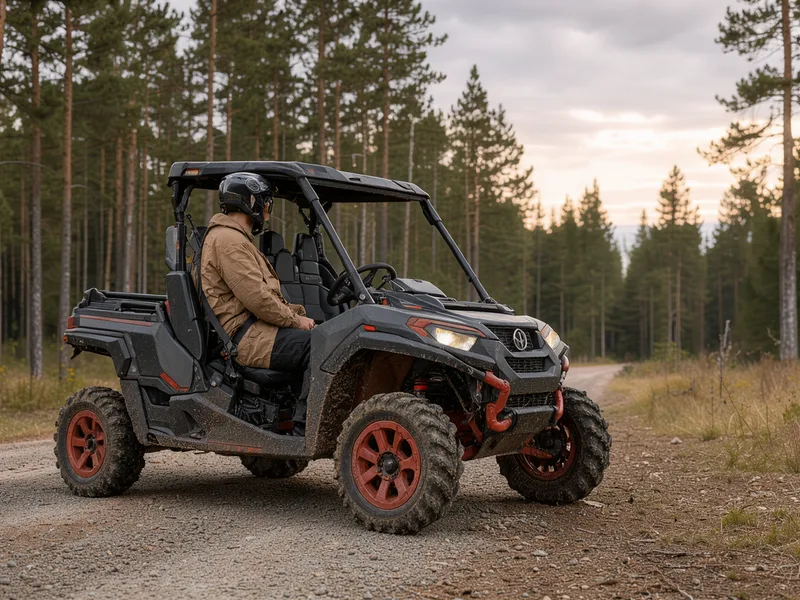
The process is the same in every state, even though the websites look different. You are looking for three things: a trail system that allows UTVs, a width limit that fits your machine, and a current season status that says the trail is open.
Start with your state's DNR or natural resources agency. Most states have an OHV or off-road vehicle page that lists designated trail systems, maps and permit requirements. Search for "[your state] OHV trails" or "[your state] off-road vehicle areas." If your state has a state parks system, check there too, because some state parks run their own OHV areas separate from the DNR.
Next, check federal land. The US Forest Service and the Bureau of Land Management manage millions of acres of trails that allow UTVs. The Forest Service has a Motor Vehicle Use Map (MVUM) for every national forest, and the BLM has travel management plans for each field office. These maps show exactly which roads and trails are open to which vehicle types. You can download them as PDFs or, in some forests, view them in an interactive map.
If you are on private land, you need permission from the landowner. A hunting lease or a farm neighbor's handshake is not the same as a public trail, but it is legal as long as the owner says yes and you are not trespassing.
Finding a Legal Trail in Five Steps
Check your machine's width
Measure your UTV from the outside of one mirror to the outside of the other, with any accessories installed. Write the number down. Most budget side-by-sides fall between 58 and 64 inches wide, but a windshield, a mirror kit or a wider tire can push you over a 64-inch limit.
Search your state OHV page
Go to your state DNR or natural resources website and look for "OHV," "off-road vehicle," "ATV and UTV trails" or "recreation areas." This page usually lists designated trail systems, maps, permit costs and contact numbers.
Check federal land maps
If you are near a national forest or BLM land, download the Motor Vehicle Use Map or travel management plan for that area. It shows which trails are open to UTVs and which are closed.
Confirm the season and current status
Trail closures happen for mud, fire, wildlife nesting or maintenance. Check the managing agency's current alerts before you drive out. A trail that was open last month may be closed today.
Buy the permit or sticker
Most trail systems require a permit, a sticker or a daily pass. Some are free, some cost $25 to $100 for the season. Nonresidents often pay more. Buy it before you show up at the trailhead.
Width Limits: The 50-Inch and 64-Inch Numbers That Matter
Trail gates and trail design set the practical width limit. A 50-inch gate means no side-by-side gets through, period. A 64-inch gate fits most budget UTVs but may not fit a wider machine with a roof rack or a mirror kit.
Here is the rough breakdown of common width limits you will see on trail systems across the country:
44 to 48 inches: ATV-only trails. No UTV fits.
50 inches: Some older trail systems and narrow forest roads. Most UTVs do not fit.
54 to 58 inches: A few newer trail systems designed for narrow UTVs. Some youth models and compact side-by-sides fit.
60 to 64 inches: The most common UTV-friendly limit. Most budget side-by-sides fit within this range.
65 inches and wider: Open trails with no width restriction, usually on BLM land or large OHV parks.
Measure your machine before you plan a trip. A Coleman Powersports 400 is about 58 inches wide. A Hisun 700 is closer to 62 inches. A CFMoto U10 Pro with mirrors can hit 64 inches. If you add a windshield, a mirror kit or a wider tire, you might push past a 64-inch gate without realizing it until you are standing in front of it.
Permits, Stickers and Nonresident Fees
Most designated OHV areas require some form of permit. The format varies: a paper permit you carry, a windshield sticker you display, a daily pass you buy at the trailhead, or a season pass you buy online. The cost ranges from free to about $100 for a season, and nonresidents often pay double or more.
Some examples of how this works in practice:
State-run OHV parks often sell a season sticker for $50 to $100, with nonresidents paying $75 to $150.
National Forest trails usually do not require a permit for the trail itself, but some trailheads charge a day-use fee of $5 to $10.
BLM land is generally free to ride on designated routes, but some areas require a permit for organized events or group rides.
County and city trails may require a local sticker or a registration with the sheriff's office.
The point is: there is no single national permit. You need to check each trail system you plan to ride. The about-us page explains how we keep our state pages current, but you should always confirm the current fee and requirement before you drive out.
Seasons and Trail Closures
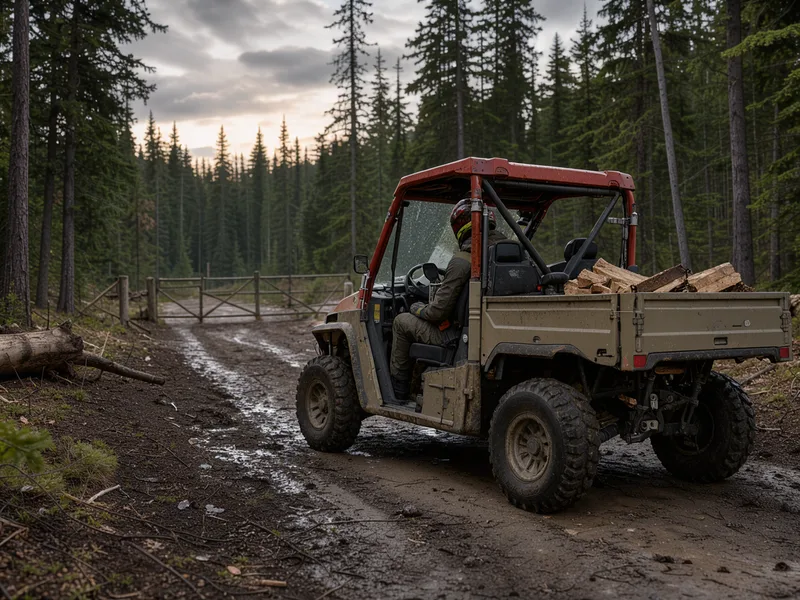
Trail systems close for a reason, and the reason is usually one of three things: mud, fire or wildlife.
Mud closures happen in spring and fall when the ground is soft. Riding in mud tears up the trail, creates ruts that hold water, and makes the trail unsafe for everyone. Many trail systems post a "mud advisory" or close trails automatically when soil moisture hits a certain level. If you see a closure sign, turn around. The trail will be there when it dries out.
Fire closures happen in summer, especially in the West. A single spark from an exhaust or a hot catalytic converter can start a wildfire in dry grass. Some states close all OHV trails during fire season, which can run from June through October. Check your state's fire restrictions before you ride in summer.
Wildlife closures protect nesting birds, calving elk or wintering deer. These are usually seasonal and posted on the trail map. They are not optional.
Trail Etiquette for UTV Riders
You do not need a rulebook to be a decent trail neighbor, but a few basics prevent most conflicts.
Yield to hikers, horseback riders and mountain bikers. They are slower, more vulnerable and usually have the right of way on shared-use trails. Slow down, pull to the side and let them pass. Do not rev your engine to hurry them along.
Stay on the designated trail. Cutting switchbacks, riding through meadows or widening the trail with your tires is how trail systems get closed. One person cutting corners can cost everyone else their access.
Keep your speed reasonable. Most trail systems have a posted speed limit of 15 to 25 mph. That is not a suggestion. A UTV at 30 mph on a narrow trail with blind corners is a recipe for hitting a hiker or a deer.
Do not ride in mud. It destroys the trail and it is the fastest way to get a trail system shut down. If the ground is soft, stay home or ride on a different surface.
Pack out what you pack in. Trash, food wrappers, broken gear. If you brought it in, bring it out.
Safety Basics: Helmets, Belts and the Rules That Actually Matter
Every trail system in the country has some form of helmet and seat belt requirement, even if your state does not require them on public roads. The managing agency sets the rule for its land, and that rule is not negotiable.
Helmets: Most OHV areas require a DOT-approved helmet for all riders, or at least for riders under 18. Some areas require helmets for everyone regardless of age. A DOT-approved helmet is the standard: it has passed the Department of Transportation impact test. If your helmet has no DOT sticker, it is not DOT-approved.
Seat belts: If your UTV has seat belts, wear them. Most trail systems require it. A rollover at 15 mph on a rocky trail is still a rollover, and a belt keeps you in the cage where the roll bar can protect you.
Age rules: Many trail systems set a minimum age for UTV operation, often 16 or 18. Some allow younger riders with an adult in the vehicle. Check the specific rule for the area you are riding.
Passenger rules: Do not carry more passengers than your machine has seats and belts for. A three-seat UTV carries three people. A four-seat UTV carries four. Extra riders on the bed or on your lap are not legal and not safe.
Common Questions About UTV Riding Areas
Can I ride my UTV on any ATV trail?
Not always. Many ATV trails have width limits of 44 to 50 inches that no side-by-side can meet. Others are designated "ATV only" by the managing agency. Check the trail map and the vehicle-type rules before you go.
Do I need a street-legal registration to ride on a trail?
No. Trail riding is governed by the land manager, not the DMV. Your street-legal registration does not help or hurt you on a Forest Service trail. What matters is the trail permit and the vehicle rules for that specific area.
What if there is no OHV area in my state?
Some states have very few designated OHV areas. In those cases, your options are federal land (national forests, BLM land), private land with permission, or organized riding events. Check the US Forest Service MVUM for your nearest national forest.
Can I ride my UTV on a county road to get to the trail?
That depends on your state and county. Some states allow UTVs on county roads with certain restrictions. Others do not. Check your state's UTV street-legal rules before you drive on any public road.
How do I know if a trail is open today?
Check the managing agency's website or call the local ranger district or DNR office. Trail closures for mud, fire or maintenance are posted there. A trail that was open last weekend may be closed today.
Do I need insurance to ride on a trail?
Most trail systems do not require insurance, but some do. A few state OHV parks require liability coverage. Check the specific area's rules. Even if it is not required, liability coverage is cheap and protects you if you hit someone.
Find your state's riding areas
We are building state-by-state trail pages with width limits, permit costs, seasons and official links. Check back as we add your state.